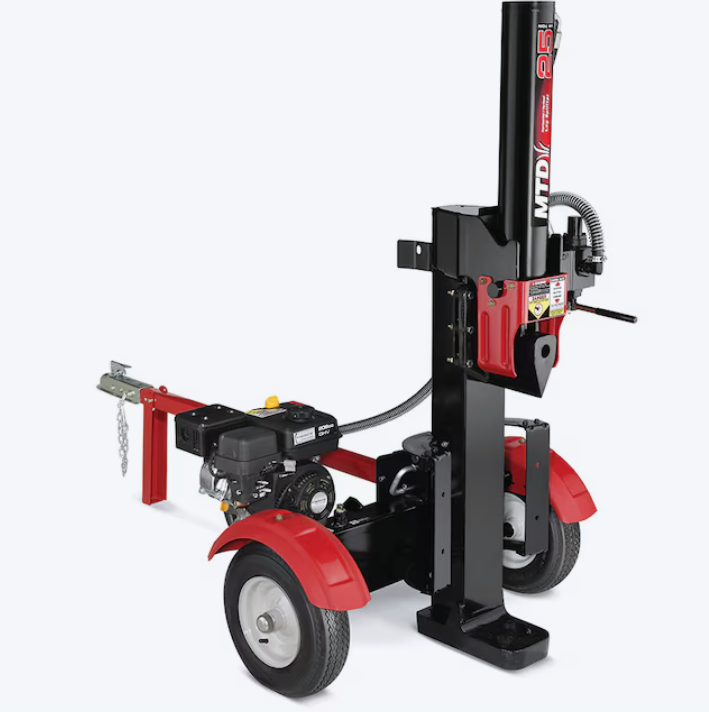
Yard Machines 25-Ton Log splitter
- Pre-filled with premium hydraulic fluid
- 19-second cycle time lets you split the most wood quickly and with little down time
- Vertical or horizontal operating position lets you work most efficiently in a variety of conditions
- Rear fenders protect against debris on roadways
- 25″ log capacity with steel log cradle to stabilize cutting position
- 2″ hitch included for towing behind vehicles
Transform Your Wood Splitting Experience with Raw Power and Professional Precision
The crisp autumn air carries the scent of fallen leaves, and winter’s approach whispers through the trees. For homeowners who rely on firewood for warmth, comfort, and that irreplaceable ambiance of a crackling fire, the season brings both anticipation and a familiar challenge: splitting logs. Enter the Yard Machines 25 Ton Log Splitter, a powerhouse that transforms the backbreaking task of wood splitting into a satisfying, efficient operation that even makes the neighbors take notice.
Picture this: you’re standing in your backyard, surrounded by a pile of freshly cut logs that would normally require hours of swinging a heavy maul, leaving you exhausted and sore. Instead, you fire up your Yard Machines 25 Ton Log Splitter, and within minutes, those stubborn pieces of hardwood are surrendering to 25 tons of hydraulic force, splitting cleanly with a satisfying crack that echoes your triumph over nature’s toughest challenges.
The Beast Unleashed: Understanding the Raw Power
When we talk about the Yard Machines 25 Ton Log Splitter, we’re discussing a machine that doesn’t just split wood – it commands respect. The 25-ton splitting force isn’t just a number on a specification sheet; it’s the difference between struggling with knotty oak and watching it surrender like butter under a hot knife. This impressive force rating means you can tackle virtually any log that fits within the machine’s capacity, from dense hardwoods like hickory and maple to more manageable softwoods like pine and fir.
The gas-powered engine that drives this hydraulic beast is engineered for reliability and sustained performance. Unlike electric models that tether you to power outlets and limit your working range, this gas-powered unit provides the freedom to split logs wherever they fall. The engine delivers consistent power output, ensuring that the hydraulic system maintains optimal pressure throughout extended splitting sessions.
The cycle time – the duration it takes for the ram to extend, split the log, and return to its starting position – typically ranges from 10 to 15 seconds depending on the specific model and log density. This might seem like a brief moment, but when you’re processing cord after cord of firewood, efficiency becomes paramount. The relatively quick cycle time of the Yard Machines 25 Ton Log Splitter means you can maintain a steady rhythm that maximizes productivity while minimizing fatigue.
Versatility Meets Practicality: Key Features That Matter
The engineering brilliance of the Yard Machines 25 Ton Log Splitter becomes evident when you examine its thoughtful design features. The machine offers both horizontal and vertical splitting options, a versatility that proves invaluable when dealing with logs of varying sizes and weights. For smaller, manageable logs up to about 50 pounds, horizontal splitting provides comfortable working height and easy log positioning. However, when you encounter those massive rounds that would be nearly impossible to lift onto a horizontal bed, the vertical splitting capability becomes your saving grace.
The towing capability transforms this powerful tool into a mobile wood-processing station. Equipped with a sturdy tongue and safety chains, the unit can be easily transported behind a pickup truck, ATV, or tractor to wherever your wood pile awaits. This mobility eliminates the need to transport heavy logs to a stationary splitter, saving both time and your back.
The maximum log capacity typically accommodates logs up to 24 inches in length and varies in diameter depending on the wood species and grain characteristics. While the machine can technically handle larger pieces, optimal performance and safety are achieved when staying within recommended dimensions. The adjustable log cradle and sturdy work table provide stable platforms for positioning logs securely before engaging the splitting ram.
Where to Find Your Wood-Splitting Companion
Locating a Yard Machines 25 Ton Log Splitter requires knowing where to look and what to expect in terms of availability. Major home improvement retailers like Home Depot and Lowe’s typically stock these units, particularly during peak firewood season from late summer through early winter. However, availability can be seasonal and region-dependent, with northern climates seeing higher demand and potentially more limited stock.
Rural supply stores and farm equipment dealers often carry Yard Machines products and may offer better customer service and technical support than big-box retailers. These specialized dealers frequently have knowledgeable staff who understand the specific needs of customers who regularly split large quantities of wood for heating purposes.
Online marketplaces provide another avenue for purchase, though buying such a substantial piece of equipment sight unseen requires careful consideration of shipping costs, assembly requirements, and return policies. The weight and size of log splitters make shipping expensive, often adding several hundred dollars to the total cost.
Investment Considerations: Understanding the Financial Commitment
The cost of a Yard Machines 25 Ton Log Splitter typically ranges from $1,800 to $2,800, depending on specific model features, current market conditions, and retailer pricing strategies. This investment might seem substantial initially, but when compared to the cost of purchasing pre-split firewood or the physical toll of manual splitting, the financial justification becomes clearer.
Consider that a cord of split hardwood can cost anywhere from $200 to $400 depending on your location and local market conditions. If you typically burn four to five cords per heating season, the cost of purchasing split wood quickly approaches or exceeds the price of the log splitter. Additionally, the satisfaction and control that comes from processing your own firewood – knowing exactly what species you’re burning and how well it’s seasoned – adds intangible value to the investment.
Financing options are sometimes available through retailers, particularly during promotional periods. Some dealers offer seasonal payment plans that align with typical wood-cutting schedules, allowing you to spread the cost across several months while immediately benefiting from the machine’s capabilities.
The Mechanical Heart: Engine Reliability and Performance
The engine reliability of the Yard Machines 25 Ton Log Splitter stems from its use of proven small engine technology, typically featuring a single-cylinder, air-cooled design that prioritizes simplicity and durability over complexity. These engines are engineered for the intermittent, high-load operation characteristic of log splitting, with robust internal components that can handle the stress of powering hydraulic pumps under full load.
Regular engine maintenance follows standard small engine protocols: regular oil changes using the manufacturer’s recommended grade, typically SAE 30 or 10W-30 depending on operating temperatures. Air filter maintenance becomes particularly important in dusty wood-processing environments, where sawdust and debris can quickly clog filter elements and restrict airflow.
The fuel system requires attention to fuel quality and storage practices. Ethanol-blended gasoline can cause problems in small engines, particularly during extended storage periods. Using fuel stabilizers and emptying the tank before long-term storage helps prevent carburetor issues that could compromise reliability.
Hydraulic System: The Power Behind the Performance
The hydraulic system represents the true heart of the Yard Machines 25 Ton Log Splitter, converting engine power into the tremendous splitting force that makes quick work of stubborn logs. Understanding this system helps users optimize performance and identify potential maintenance needs before they become costly problems.
The hydraulic fluid requirements are specific and critical to proper operation. Most units specify AW-32 hydraulic fluid, though some may call for AW-46 in extreme temperature conditions. Using the correct fluid viscosity ensures proper valve operation, seal longevity, and efficient power transfer. The hydraulic reservoir typically holds between 4 and 6 gallons of fluid, and maintaining proper fluid levels prevents pump cavitation and premature wear.
Temperature considerations affect hydraulic performance significantly. Cold hydraulic fluid becomes thicker, slowing cycle times and potentially straining system components. Conversely, overheated fluid can cause seals to fail and reduce the fluid’s lubricating properties. Operating within manufacturer-recommended temperature ranges and allowing proper warm-up time in cold conditions extends system life and maintains peak performance.
Assembly and Setup: Getting Started Right
Assembling the Yard Machines 25 Ton Log Splitter requires careful attention to detail and adherence to the manufacturer’s instructions. The process typically takes 4 to 6 hours for individuals with basic mechanical skills and appropriate tools. Key assembly points include proper mounting of the engine, connecting hydraulic lines without introducing contaminants, and ensuring all safety guards and shields are correctly installed.
The initial setup process includes checking all fluid levels, verifying proper belt tension, and conducting a thorough pre-operation inspection. This preparation phase, while time-consuming, prevents many common issues that can arise from improper assembly or overlooked details.
Safety considerations during assembly cannot be overstated. Hydraulic systems operate under extreme pressure, and improperly connected fittings can fail catastrophically. Following torque specifications and using proper thread sealants ensures reliable, safe operation throughout the machine’s service life.
Hardwood Challenges: When Tough Gets Going
The question of whether the Yard Machines 25 Ton Log Splitter can split hardwood deserves a definitive answer: absolutely, and with authority. Dense hardwoods like oak, hickory, maple, and ash represent the ultimate test of a log splitter’s capabilities. These species, prized for their high BTU content and long burn times, also present the greatest splitting challenges due to their interlocked grain patterns and natural toughness.
The 25-ton force rating provides substantial margin over what’s typically required for most hardwood species. Even knotty pieces that would defeat hand tools surrender to this level of hydraulic pressure. However, success with challenging hardwoods depends on proper technique, including positioning logs to take advantage of natural grain lines and avoiding attempting to split pieces that exceed the machine’s recommended dimensions.
Green versus seasoned wood presents different challenges. Fresh-cut green hardwood can be surprisingly easy to split despite its weight, as the high moisture content hasn’t allowed the grain to tighten. Seasoned hardwood, while lighter and more valuable as fuel, often proves more challenging to split as the drying process can cause grain patterns to interlock more tightly.
Maintenance Mastery: Keeping Your Investment Running Strong
Maintaining a Yard Machines 25 Ton Log Splitter requires a systematic approach that addresses both the engine and hydraulic components. Regular maintenance schedules prevent minor issues from becoming major failures and ensure the machine remains reliable when you need it most.
Engine maintenance follows a seasonal pattern that aligns with typical usage cycles. Pre-season preparation includes fresh fuel, clean air filters, new spark plugs, and fresh engine oil. Mid-season maintenance focuses on monitoring fluid levels and addressing any developing issues before they interrupt productive work sessions. Post-season care emphasizes proper storage preparation, including fuel system treatment and comprehensive cleaning.
Hydraulic system maintenance centers on fluid quality and filtration. Most units include return filters that require periodic replacement, typically annually for average users. Hydraulic fluid should be changed every 100 hours of operation or annually, whichever comes first. Clean fluid prevents premature wear of expensive hydraulic components and ensures consistent performance.
Lubrication points throughout the machine require attention according to manufacturer schedules. Grease fittings on pivot points, wheel bearings, and other moving components need regular servicing to prevent wear and binding. Using the correct grease type and avoiding over-lubrication helps maintain optimal performance.
Troubleshooting Common Challenges
Understanding how to troubleshoot common issues with the Yard Machines 25 Ton Log Splitter empowers users to address problems quickly and avoid costly service calls. Most issues fall into predictable categories related to engine performance, hydraulic function, or operator technique.
Engine-related problems often manifest as starting difficulties, rough idle, or power loss under load. Systematic diagnosis begins with fuel system checks, including fuel quality, fuel flow, and carburetor function. Air filtration problems can cause similar symptoms and represent the most common maintenance-related issue owners encounter.
Hydraulic system troubles typically present as slow cycle times, weak splitting force, or complete loss of function. Low fluid levels, contaminated fluid, or air in the system cause most hydraulic problems. Systematic diagnosis involves checking fluid levels, inspecting for leaks, and verifying proper pump operation.
Operator technique issues often masquerade as equipment problems. Attempting to split oversized pieces, positioning logs improperly, or operating the machine beyond its design parameters can create symptoms that appear to be mechanical failures but actually represent usage errors.
Real-World Performance: Customer Experiences and Reviews
Customer reviews of the Yard Machines 25 Ton Log Splitter paint a picture of a capable machine that delivers on its promises while occasionally frustrating users with minor inconveniences. Positive feedback consistently highlights the machine’s splitting power, build quality, and value proposition compared to higher-priced alternatives.
Users frequently praise the machine’s ability to handle challenging hardwoods that defeated their previous equipment. Stories of splitting knotty oak and twisted maple pieces that would have been impossible by hand are common themes in positive reviews. The horizontal and vertical splitting capabilities receive particular appreciation from users dealing with large-diameter logs.
Critical feedback often focuses on assembly complexity, initial setup challenges, and occasional quality control issues with minor components. Some users report receiving units with missing hardware or poorly packaged components that required additional trips to hardware stores. These issues, while frustrating, rarely affect the machine’s core functionality once resolved.
Reliability experiences vary depending on maintenance practices and usage intensity. Users who follow recommended maintenance schedules report years of trouble-free service, while those who neglect basic care often encounter premature failures that could have been prevented.
Comparative Analysis: Standing Against the Competition
How the Yard Machines 25 Ton Log Splitter compares to other log splitters in its class reveals its position as a solid mid-range option that balances performance, features, and affordability. When evaluated against premium brands, it often delivers comparable splitting performance at a lower initial cost, though sometimes with trade-offs in component quality or feature refinement.
Compared to lower-priced alternatives, the Yard Machines unit typically offers superior build quality, more robust hydraulic components, and better engine reliability. The additional investment over budget models pays dividends in reduced maintenance requirements and extended service life.
Direct competitors in the same price range often offer similar specifications but may differ in dealer support, parts availability, or specific feature implementation. The choice between closely matched alternatives often comes down to local dealer relationships, regional parts availability, and personal preferences regarding brand reputation.
Commercial Applications and Limitations
The question of whether the Yard Machines 25 Ton Log Splitter is suitable for commercial use requires careful consideration of duty cycle, usage intensity, and performance expectations. While the machine can certainly handle commercial-level splitting tasks, its design priorities favor homeowner and small-scale commercial applications rather than high-volume production environments.
For firewood dealers processing moderate volumes, landscape contractors handling storm cleanup, or small sawmill operations creating split products, the machine can provide reliable service when properly maintained and operated within reasonable duty cycles. However, operations requiring continuous daily use or processing massive volumes might benefit from commercial-grade equipment designed for higher duty cycles.
The key to successful commercial application lies in matching machine capabilities to actual requirements and implementing rigorous maintenance schedules that prevent premature failures. Commercial users often find success using multiple units in rotation, allowing proper cool-down periods and reducing stress on individual machines.
Warranty Protection and Parts Availability
The warranty on the Yard Machines 25 Ton Log Splitter typically includes coverage for major components for periods ranging from one to three years, depending on the specific model and point of purchase. Engine warranties may be handled separately by the engine manufacturer, often providing longer coverage periods than the equipment manufacturer’s warranty.
Understanding warranty terms helps users maximize protection and avoid actions that might void coverage. Most warranties require adherence to recommended maintenance schedules, use of specified fluids and parts, and operation within design parameters. Documenting maintenance activities and retaining receipts helps support warranty claims if issues arise.
Replacement parts availability represents a crucial long-term consideration for any mechanical equipment purchase. Yard Machines products generally enjoy good parts support through established dealer networks and online suppliers. Common wear items like hydraulic seals, filters, and engine components typically remain available for many years after production ends.
Critical replacement parts to monitor include hydraulic cylinders, pumps, and control valves. While these components rarely fail with proper maintenance, their availability and cost significantly impact the long-term viability of keeping an older machine in service versus replacing it entirely.
Safety Considerations: Operating with Confidence
Operating any log splitter safely requires understanding the unique hazards associated with high-pressure hydraulic systems, rotating engines, and the unpredictable behavior of wood under extreme stress. The Yard Machines 25 Ton Log Splitter incorporates safety features designed to protect operators, but safe operation ultimately depends on user awareness and adherence to proper procedures.
Personal protective equipment represents the first line of defense against injury. Safety glasses protect against flying debris, work gloves improve grip and protect hands from splinters, and steel-toed boots guard against falling log pieces. Long hair should be secured, and loose clothing avoided around rotating engine components.
Proper log positioning and splitting techniques minimize the risk of kickback or unpredictable log movement. Understanding grain patterns, identifying potential weak points, and positioning logs to split along natural lines reduces stress on the machine and improves safety. Never attempt to split logs positioned unstably or pieces that exceed machine specifications.
Seasonal Storage and Long-Term Care
Proper seasonal storage of the Yard Machines 25 Ton Log Splitter significantly extends its service life and ensures reliable startup when splitting season returns. The storage process should begin before extended idle periods and include comprehensive preparation of both engine and hydraulic systems.
Fuel system preparation involves either completely draining the tank and carburetor or treating the fuel with stabilizers designed for extended storage. Ethanol-blended fuels are particularly problematic during storage, as they attract moisture and can cause corrosion in fuel system components. Running treated fuel through the system ensures protection throughout the storage period.
Engine oil should be changed before storage, as used oil contains combustion byproducts that can cause corrosion during idle periods. Fresh oil provides better protection and eliminates the need for oil changes before the next operating season. Removing the spark plug and adding a small amount of oil to the cylinder helps prevent internal corrosion.
Hydraulic system storage preparation focuses on protecting fluid quality and preventing moisture intrusion. Topping off the hydraulic reservoir eliminates air space where condensation can form, while operating the system through several cycles distributes fresh fluid throughout all components.
Conclusion: Your Partner in Wood Processing Excellence
The Yard Machines 25 Ton Log Splitter represents more than just another tool in the shed – it’s a gateway to energy independence, a solution to backbreaking labor, and a reliable partner in the age-old tradition of preparing firewood for warmth and comfort. Whether you’re a homeowner facing several cords of splitting each fall, a small business owner looking to add firewood processing to your services, or simply someone who appreciates the satisfaction of preparing your own fuel, this machine delivers the performance, reliability, and value that make the investment worthwhile.
The combination of 25 tons of splitting force, versatile horizontal and vertical operation, reliable gas-powered performance, and thoughtful engineering creates a tool that transforms the wood splitting experience from drudgery to satisfaction. While no machine is perfect, and proper maintenance remains essential for long-term success, the Yard Machines 25 Ton Log Splitter offers an compelling balance of capability and affordability that has earned its place in thousands of yards, farms, and commercial operations across the country.
As winter approaches and the need for split firewood becomes more pressing, the Yard Machines 25 Ton Log Splitter stands ready to tackle whatever challenges your wood pile presents. From the toughest knotted oak to the straightest maple, from small kindling pieces to maximum-capacity rounds, this machine brings professional-level performance within reach of anyone serious about processing their own firewood efficiently and effectively.