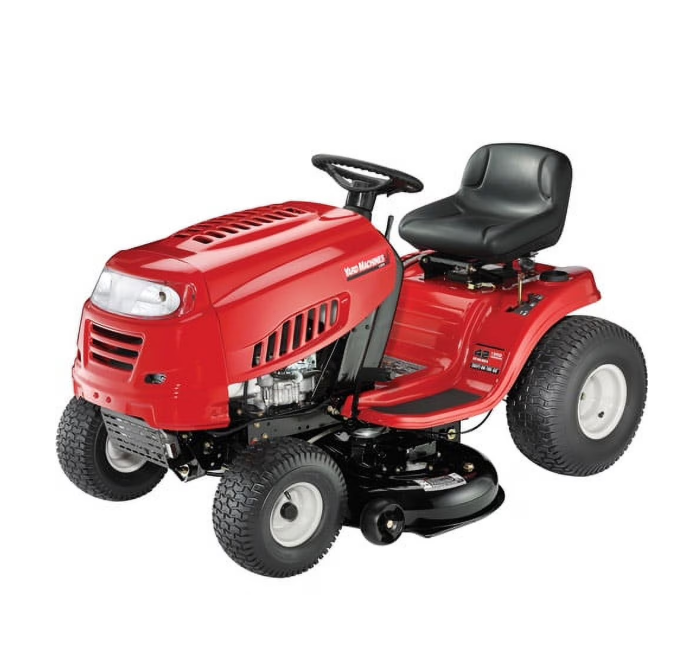
Yard Machines 42″ 420cc MTD Powermore Riding Mower with Shift-on-the-Go Drive System
- Powered by a strong 420cc Engine with Shift on the Go Drive System
- Equipped with a 7-speed gear shift to give you the power to conquer all your lawn tasks
- Features a 42 inch blade that can cut a very wide area
- This riding lawn mower is great for mowing lawns or any hilly, grassy area
- Backed by a 2-year limited warranty
Transform Your Weekly Chore Into a Leisurely Ride Through Paradise
Picture this: It’s a crisp Saturday morning, the dew is still glistening on your expansive lawn, and instead of dreading the next three hours of pushing a walk-behind mower under the blazing sun, you’re settling into the comfortable seat of your Yard Machines riding mower. The engine purrs to life with the gentle turn of a key, and suddenly, lawn care transforms from back-breaking labor into a peaceful, almost meditative journey across your property.
The Yard Machines riding mower isn’t just another piece of equipment cluttering your garage—it’s your ticket to reclaiming your weekends while maintaining a lawn that would make your neighbors pause in admiration. But what makes this particular brand stand out in the crowded landscape of riding mowers? Let’s embark on a comprehensive journey through everything you need to know about these remarkable machines.
The Art of Choosing Your Perfect Lawn Companion
When you’re standing in the showroom or scrolling through endless online options, the question inevitably arises: where exactly can you find the Yard Machines riding mower that’s calling your name? The beauty of this brand lies in its accessibility. You’ll discover these workhorses at major home improvement retailers like Home Depot and Lowe’s, where knowledgeable staff can walk you through the various models and help you visualize how each one might handle your specific terrain challenges.
Tractor Supply Company has built a reputation as another reliable destination for Yard Machines riding mower enthusiasts, particularly those who appreciate the agricultural heritage that these machines represent. The atmosphere in these stores often feels more authentic, surrounded by folks who understand the relationship between human and machine that develops over seasons of shared lawn care adventures.
Don’t overlook the growing online marketplace either. Retailers like Amazon and Walmart have expanded their heavy equipment offerings significantly, often providing detailed customer reviews that paint vivid pictures of real-world performance. Reading through these testimonials feels like sitting around a neighborhood barbecue, listening to friends share their honest experiences with their trusty riding companions.
Local authorized dealers represent perhaps the most valuable resource, though they require a bit more detective work to locate. These specialists don’t just sell Yard Machines riding mowers—they live and breathe them. They understand the subtle differences between models, can predict which features will matter most for your specific property, and often provide service support that extends far beyond the initial purchase.
Investment Wisdom: Understanding the Financial Landscape
The conversation about cost requires a nuanced approach because a Yard Machines riding mower represents different values to different homeowners. Entry-level models typically start in the range of $1,200 to $1,800, positioning them as accessible options for homeowners transitioning from walk-behind mowers to riding convenience. These foundational models deliver reliable performance without overwhelming features that might intimidate first-time riding mower operators.
Mid-range Yard Machines riding mowers, priced between $1,800 and $2,800, offer the sweet spot that many homeowners discover represents the best balance of features, durability, and value. These models often include enhanced comfort features, more powerful engines, and additional cutting deck options that make them suitable for a broader range of property sizes and terrain challenges.
Premium models can extend upward toward $3,500 or beyond, incorporating advanced features like zero-turn capabilities, larger cutting decks, and enhanced engine performance that appeals to homeowners managing significant acreage or those who simply appreciate superior engineering and comfort during extended mowing sessions.
However, the true cost calculation extends beyond the initial purchase price. Factor in the value of your time—if a Yard Machines riding mower reduces your weekly mowing time from three hours to one hour, that time savings compounds significantly over the years of ownership. Consider also the physical relief factor, particularly valuable for homeowners dealing with mobility challenges or those who simply prefer to reserve their physical energy for other weekend activities.
Engineering Excellence: Features That Define Performance
The feature set of a Yard Machines riding mower reads like a carefully orchestrated symphony of practical engineering decisions. The heart of most models beats with a reliable single-cylinder engine, typically ranging from 420cc to 547cc, providing the steady power delivery that transforms grass cutting from a struggle against resistance into a smooth glide across your landscape.
Side-by-side transmission options include both manual gear systems and hydrostatic drives, each offering distinct advantages depending on your terrain and preferences. Manual transmissions appeal to operators who enjoy the direct connection and control that comes with shifting gears, while hydrostatic drives provide the seamless speed variation that makes navigating obstacles and varying terrain feel effortless.
The cutting deck represents where artistry meets engineering. Most Yard Machines riding mowers feature stamped steel decks ranging from 38 to 46 inches in width, designed with aerodynamic principles that promote superior grass lift and discharge patterns. The deck design isn’t merely about cutting—it’s about creating consistent, professional-looking results that enhance your property’s overall appearance.
Comfort features deserve particular attention because they directly impact your willingness to maintain regular mowing schedules. High-back seats with armrests transform long mowing sessions from endurance tests into comfortable experiences. Cup holders, while seemingly minor details, acknowledge that lawn care should accommodate life’s simple pleasures—perhaps a cold beverage on a warm afternoon.
Power and Performance: Engine Specifications That Matter
The engine specifications of a Yard Machines riding mower tell a story of thoughtful engineering focused on residential applications. Most models feature air-cooled, overhead valve engines that deliver reliable performance across varying weather conditions and seasonal demands. These engines typically produce between 17 and 24 horsepower, providing ample power for residential cutting applications while maintaining fuel efficiency that keeps operating costs reasonable.
Single-cylinder engines dominate the Yard Machines riding mower lineup, offering simplicity in maintenance while delivering consistent torque characteristics that handle typical grass cutting resistance effectively. The overhead valve design promotes better fuel efficiency and cleaner emissions compared to older side-valve configurations, reflecting modern environmental consciousness without sacrificing performance.
Engine displacement typically ranges from 420cc to 547cc, with larger displacements generally corresponding to higher power output and better performance in challenging conditions like tall or thick grass, slight inclines, or when operating accessories like grass catchers or mulching kits that can increase engine load.
The cooling system design deserves recognition for its practical elegance. Air-cooled systems eliminate the complexity and potential maintenance issues associated with liquid cooling while providing adequate temperature management for the duty cycles typical in residential lawn care applications. This design choice reflects the brand’s focus on reliability and ease of maintenance.
Conquering Large Landscapes: Capability Assessment
The question of whether a Yard Machines riding mower can handle large lawns requires examining both technical specifications and real-world performance characteristics. Properties up to two acres represent the comfortable operational range for most models, though the definition of “comfortable” depends heavily on terrain complexity and grass conditions.
Cutting deck width directly impacts efficiency on large properties. A 42-inch cutting deck covers significantly more ground per pass than a 38-inch deck, potentially reducing total mowing time by 15-20% on large, open areas. However, larger decks can become cumbersome in areas with numerous obstacles like trees, flower beds, or decorative features that require frequent maneuvering.
Engine power becomes crucial on larger properties, not necessarily for cutting performance, but for maintaining consistent forward speed and preventing engine lugging in challenging conditions. The difference between a 17-horsepower and 22-horsepower Yard Machines riding mower might seem modest on paper, but becomes noticeable during extended mowing sessions or when encountering areas of dense or tall grass.
Fuel tank capacity influences practical mowing range, with larger tanks allowing longer continuous operation. Most Yard Machines riding mowers feature tanks holding 1.5 to 2.5 gallons, typically providing 60-90 minutes of continuous operation depending on engine size and operating conditions.
Mastering Operation: A Journey from Novice to Expert
Operating a Yard Machines riding mower begins with understanding that these machines respond best to deliberate, thoughtful control rather than aggressive maneuvering. The initial learning curve involves developing a feel for the machine’s response characteristics—how it accelerates, turns, and handles different grass conditions.
Pre-operation inspection becomes a ritual that protects both machine and operator. Check engine oil level, inspect the cutting deck for debris or damage, verify that safety systems like the seat switch and blade engagement mechanisms function properly, and ensure adequate fuel for your planned mowing session.
Starting procedures typically involve engaging the parking brake, ensuring the cutting deck is disengaged, setting the throttle to the choke position for cold starts, and turning the key. Modern Yard Machines riding mowers incorporate safety interlocks that prevent starting unless specific conditions are met, protecting both equipment and operator.
Mowing technique development separates efficient operators from those who struggle with uneven results or excessive mowing times. Maintain consistent ground speed, overlap cutting paths by approximately 2-3 inches, and avoid cutting more than one-third of grass height in a single session. These principles, while simple, dramatically impact both cutting quality and long-term lawn health.
Precision in Every Pass: Cutting Width Considerations
The cutting width of a Yard Machines riding mower represents one of the most fundamental performance specifications, directly impacting both efficiency and maneuverability. Standard cutting widths typically range from 38 to 46 inches, with each size category serving distinct property types and operator preferences.
The 38-inch cutting deck appeals to homeowners managing properties with numerous obstacles, narrow passages between landscaping features, or storage limitations that favor more compact equipment. Despite its smaller size, a 38-inch deck can efficiently handle properties up to one acre, particularly when combined with thoughtful mowing patterns that minimize wasted motion.
42-inch cutting decks represent the most popular choice among Yard Machines riding mower customers, offering an optimal balance between coverage efficiency and maneuverability. This width handles most residential properties effectively while maintaining the ability to navigate around common landscape obstacles without excessive trimming requirements.
The 46-inch cutting deck maximizes efficiency on larger, more open properties where obstacles are minimal and straight cutting passes can extend for significant distances. The additional width reduces total mowing time but requires more careful attention to turning radiuses and storage space requirements.
Cutting deck design extends beyond simple width measurements. The aerodynamic profile, discharge chute design, and blade configuration work together to influence cutting quality, grass discharge patterns, and overall performance characteristics that impact the finished appearance of your lawn.
Collection and Disposal: Grass Management Solutions
The grass catcher question reveals one area where Yard Machines riding mower models vary significantly in their standard equipment and optional accessories. Some models include rear-mounted grass catchers as standard equipment, while others offer them as optional accessories that can be added based on individual preferences and lawn care philosophies.
Rear-mounted baggers typically offer capacities ranging from 2.5 to 3.5 bushels, providing sufficient collection volume for moderate-sized properties without requiring frequent emptying stops. The collection efficiency depends heavily on grass conditions—dry grass flows more readily into collection systems than damp grass, which tends to clump and potentially clog discharge chutes.
Side discharge represents the standard configuration for most Yard Machines riding mowers, distributing grass clippings across the lawn surface where they decompose naturally, returning nutrients to the soil. This approach eliminates the need for clipping disposal while reducing fertilizer requirements, though it requires more frequent mowing to prevent excessive clipping accumulation that can smother grass.
Mulching capabilities, available on select models or as accessory kits, represent perhaps the most environmentally conscious grass management approach. Mulching systems re-cut grass clippings into fine particles that settle into the lawn canopy, virtually disappearing from surface view while providing natural fertilization benefits.
Maintenance Mastery: Preserving Performance and Longevity
Maintenance of a Yard Machines riding mower follows predictable patterns that reward consistency and attention to detail. Regular maintenance not only preserves performance and extends equipment life but also prevents the frustrating breakdowns that inevitably occur at the worst possible moments—usually just before important social gatherings when lawn appearance matters most.
Engine oil changes represent the most critical maintenance task, typically required every 25-50 hours of operation or annually, whichever comes first. The relatively small oil capacity (typically 18-20 ounces) makes oil changes quick and inexpensive, but the impact on engine longevity is profound. Fresh oil maintains proper lubrication while removing combustion byproducts that can accelerate internal wear.
Air filter maintenance directly impacts engine performance and longevity. Foam pre-filters require cleaning every few uses in dusty conditions, while paper air filters typically need replacement annually or when visibly dirty. A clean air filter ensures optimal fuel-air mixture ratios while preventing abrasive particles from entering the engine.
Spark plug replacement, while needed less frequently than other maintenance tasks, significantly impacts starting reliability and engine performance. Annual replacement ensures reliable ignition while providing an opportunity to assess engine condition based on spark plug appearance and electrode wear patterns.
Blade maintenance combines safety considerations with performance optimization. Sharp blades cut grass cleanly, reducing plant stress and improving lawn appearance. Dull blades tear grass, creating brown tips and increasing susceptibility to disease. Most homeowners should plan on blade sharpening or replacement at least annually, though frequency depends on mowing conditions and total operating hours.
Versatility in Action: Adjustable Cutting Heights
The cutting height adjustment system of a Yard Machines riding mower provides the flexibility needed to adapt to seasonal grass growth patterns, weather conditions, and aesthetic preferences. Most models offer height ranges from approximately 1.5 inches to 4 inches, accommodating everything from putting green-smooth surfaces to more natural, relaxed lawn appearances.
Spring cutting height strategies typically begin with higher settings as grass emerges from winter dormancy, gradually reducing height as growth accelerates and weather conditions stabilize. This approach prevents shocking grass plants while encouraging healthy root development and thick canopy formation.
Summer cutting height management becomes crucial during stress periods when high temperatures and potential drought conditions challenge grass health. Maintaining slightly higher cutting heights during summer months helps grass plants retain moisture and maintain photosynthetic capacity through increased leaf surface area.
Fall cutting height considerations involve gradually reducing height toward the end of the growing season while avoiding cutting too short too early, which can stimulate new growth that won’t have time to harden off before winter. The final cutting of the season typically uses a moderately low setting to prevent matting under snow cover.
The adjustment mechanism itself varies among Yard Machines riding mower models, with some featuring single-lever adjustment that changes all cutting positions simultaneously, while others require individual wheel adjustment. Single-lever systems offer convenience but may be more susceptible to mechanical issues, while individual adjustment systems provide more precise control but require more time to modify settings.
Fuel Fundamentals: Powering Your Lawn Care Journey
Understanding fuel requirements for your Yard Machines riding mower extends beyond simply knowing what to put in the tank—it encompasses storage considerations, seasonal preparation, and performance optimization strategies that can significantly impact your ownership experience.
Regular unleaded gasoline with octane ratings of 87 or higher provides adequate performance for most Yard Machines riding mower engines, though some operators report improved starting and smoother operation with mid-grade or premium fuels, particularly in older engines or challenging environmental conditions.
Ethanol content considerations have become increasingly important as fuel formulations have evolved. While most modern engines can handle up to 10% ethanol (E10) without issues, some operators prefer ethanol-free fuels for seasonal equipment to minimize fuel system problems during extended storage periods.
Fuel additives can provide benefits, particularly for equipment used seasonally or stored for extended periods. Fuel stabilizers prevent gum and varnish formation while maintaining fuel freshness, while cleaning additives can help maintain fuel system cleanliness and optimal engine performance.
Seasonal fuel management strategies become crucial for equipment reliability. Spring preparation might involve draining old fuel and replacing it with fresh gasoline, while fall preparation could include adding stabilizer and running the engine long enough to circulate treated fuel throughout the system.
Troubleshooting Wisdom: Solving Common Challenges
Troubleshooting a Yard Machines riding mower becomes less mysterious when you understand the most common issues and their typical solutions. Most problems fall into predictable categories related to fuel systems, electrical components, or mechanical adjustments that can be addressed with basic tools and systematic diagnostic approaches.
Starting difficulties represent the most frequent complaint, often stemming from fuel system issues, electrical problems, or operator error. Systematic diagnosis begins with verifying fuel supply and freshness, confirming that safety interlocks are properly engaged, and checking battery condition and connections.
Cutting quality problems typically relate to blade condition, cutting height settings, or operator technique. Dull or damaged blades create ragged cuts that brown quickly, while incorrect cutting heights can cause scalping on uneven terrain or leave grass too long for optimal appearance.
Engine performance issues might manifest as power loss, rough running, or excessive fuel consumption. Common causes include dirty air filters, old fuel, incorrect oil levels, or carburetor adjustments that have shifted over time or due to environmental conditions.
Transmission problems in hydrostatic models often relate to low hydraulic fluid levels, contaminated fluid, or drive belt issues rather than major internal failures. These systems generally provide reliable service with minimal maintenance, but benefit from annual fluid checks and belt inspections.
Parts and Service: Supporting Long-Term Ownership
Replacement parts availability for Yard Machines riding mowers reflects the brand’s commitment to supporting long-term ownership and customer satisfaction. Common wear items like belts, blades, filters, and spark plugs are readily available through multiple channels, ensuring that routine maintenance doesn’t become a frustrating search for obsolete components.
Original equipment manufacturer (OEM) parts provide the assurance of exact fit and performance characteristics matching the original design specifications. While potentially more expensive than aftermarket alternatives, OEM parts often deliver superior longevity and performance, particularly for critical components like cutting blades and drive belts.
Aftermarket parts options expand choices while potentially reducing costs, though quality can vary significantly among suppliers. Reputable aftermarket manufacturers often provide parts that meet or exceed OEM specifications while offering competitive pricing that appeals to cost-conscious owners.
Local dealer networks provide valuable support for parts identification and technical guidance, particularly for owners who prefer professional assistance with maintenance and repairs. These relationships often prove invaluable when dealing with unusual problems or when seeking advice about modifications or accessories.
Online parts resources have revolutionized parts availability and convenience, allowing owners to identify, order, and receive components without leaving home. Detailed parts diagrams and compatibility information help ensure correct selection, while customer reviews provide insights into parts quality and installation experiences.
Terrain Mastery: Handling Challenging Landscapes
The ability of a Yard Machines riding mower to handle uneven terrain depends on both machine design characteristics and operator technique. These machines excel on gently rolling terrain with gradual elevation changes, though they require careful consideration when encountering steeper slopes or significant ground irregularities.
Slope handling capabilities typically max out around 15-degree inclines, though practical limitations often occur well below theoretical maximums depending on grass conditions and operator comfort levels. Wet grass significantly reduces traction and increases the risk of sliding, while dry conditions generally provide better control and stability.
Ground clearance and wheel base design influence performance on uneven terrain, with longer wheelbases generally providing better stability but potentially reducing maneuverability in tight spaces. Ground clearance affects the ability to traverse minor obstacles like tree roots or small depressions without scalping or deck damage.
Tire selection and maintenance impact terrain handling significantly, with properly inflated tires providing optimal traction and ride comfort. Some operators experiment with different tire tread patterns or pressures to optimize performance for their specific terrain challenges, though modifications should be approached carefully to avoid compromising safety or stability.
Beginner-Friendly Design: Accessibility for New Operators
The Yard Machines riding mower philosophy emphasizes accessibility and ease of use for operators transitioning from walk-behind mowers or those new to riding equipment entirely. This design approach manifests in intuitive control layouts, straightforward operation procedures, and forgiving handling characteristics that build confidence rather than intimidating new users.
Control placement follows logical patterns that minimize confusion during operation, with steering controls, throttle, and cutting deck engagement positioned within easy reach of the seated operator. Color coding and clear labeling help distinguish between different functions, reducing the learning curve associated with new equipment.
Safety systems integrated into Yard Machines riding mowers protect both equipment and operators while teaching proper operational procedures. Seat switches prevent operation when the operator is not properly positioned, while blade engagement systems require deliberate action to activate cutting functions.
Visibility from the operator position receives careful attention in design, ensuring clear sight lines to cutting areas, obstacles, and terrain features. This visibility reduces operator fatigue and increases confidence when navigating challenging areas or working around landscape features.
Blade Maintenance: Sharpening Skills and Strategies
Sharpening blades on a Yard Machines riding mower represents one of the most important maintenance skills every owner should master, directly impacting both cutting performance and long-term lawn health. Sharp blades slice grass cleanly, reducing plant stress and creating the crisp, professional appearance that distinguishes well-maintained properties.
Blade removal requires basic tools and attention to safety procedures, including disconnecting the spark plug wire and ensuring the engine is completely cool before beginning work. Most Yard Machines riding mower models use standard bolt patterns that simplify blade removal with common socket tools.
Sharpening techniques range from professional service to do-it-yourself approaches using angle grinders, bench grinders, or specialized blade sharpening equipment. Maintaining the original blade angle and ensuring equal material removal from both ends preserves balance and prevents vibration issues that can damage deck components.
Balance checking becomes crucial after sharpening, as unbalanced blades create vibration that accelerates wear on deck components and provides poor cutting quality. Simple balance checks using a nail or specialized balancing tools can identify imbalances that require additional material removal to correct.
Installation procedures reverse the removal process but include important steps like properly torquing blade bolts and ensuring correct blade orientation. Improperly installed blades can cause serious safety hazards and equipment damage, making careful attention to installation procedures essential.
Warranty Protection: Understanding Your Coverage
Warranty coverage for Yard Machines riding mowers typically includes comprehensive protection for manufacturing defects while establishing clear guidelines for maintenance requirements and coverage limitations. Understanding warranty terms helps owners protect their investment while avoiding inadvertent actions that might void coverage.
Standard warranty periods generally extend for two to three years on residential applications, with some components like engines potentially carrying separate warranty terms from their manufacturers. Commercial or rental use typically reduces warranty coverage significantly, reflecting the increased stress associated with professional applications.
Maintenance requirements specified in warranty documentation must be followed precisely to maintain coverage, including oil change intervals, filter replacement schedules, and other routine service items. Documentation of maintenance activities provides important protection in the event warranty claims arise.
Exclusions and limitations define what warranty coverage does not include, typically encompassing normal wear items like belts and blades, damage from misuse or accidents, and problems arising from inadequate maintenance or storage. Understanding these limitations helps set appropriate expectations for warranty protection.
Electric Evolution: Exploring Alternative Power Sources
While traditional Yard Machines riding mowers rely on gasoline engines, the landscape of riding mower technology continues evolving toward electric alternatives that offer different advantages and challenges compared to conventional models. Electric riding mowers eliminate fuel mixing, starting procedures, and emissions while providing quieter operation that many operators find appealing.
Battery technology advances have made electric riding mowers increasingly viable for residential applications, though current technology generally favors smaller properties or those with access to convenient charging infrastructure. Runtime limitations and charging requirements represent the primary considerations when evaluating electric alternatives.
Performance characteristics of electric models differ significantly from gasoline-powered units, with electric motors providing instant torque and consistent power delivery throughout the operating range. However, battery capacity limitations can affect cutting performance in challenging conditions like tall or wet grass that places higher demands on the motor system.
Cost considerations for electric models extend beyond initial purchase price to include battery replacement costs, charging infrastructure requirements, and potential energy costs associated with regular charging cycles. These factors require careful evaluation against the operating costs and maintenance requirements of traditional gasoline models.
Competitive Landscape: Brand Comparisons and Market Position
The Yard Machines riding mower occupies a distinctive position in the competitive landscape, emphasizing value, reliability, and accessibility rather than premium features or cutting-edge technology. This positioning appeals to practical homeowners who prioritize proven performance over sophisticated features that might increase complexity and cost.
Compared to premium brands like John Deere or Cub Cadet, Yard Machines riding mowers typically offer similar basic functionality at more accessible price points, though they may lack some of the advanced comfort features or heavy-duty construction found in higher-end models. This trade-off appeals to budget-conscious consumers who understand that basic functionality often provides the most practical value.
Build quality reflects the brand’s focus on essential reliability rather than premium materials or sophisticated manufacturing processes. Components are engineered to provide dependable service in typical residential applications while maintaining cost effectiveness that makes riding mower ownership accessible to a broader range of homeowners.
Service and support networks vary compared to established premium brands, though the simplicity of Yard Machines riding mower design often reduces the need for specialized service expertise. Many routine maintenance and repair tasks can be performed by owners with basic mechanical skills and common tools.
Customer Experiences: Real-World Testimonials and Insights
Customer reviews for Yard Machines riding mowers paint a picture of practical satisfaction among homeowners who appreciate straightforward functionality and reliable performance. Many reviewers emphasize the transformation in their lawn care experience, describing the transition from dreading weekly mowing sessions to looking forward to peaceful rides across their property.
Common praise focuses on ease of operation, with many first-time riding mower owners expressing surprise at how quickly they adapted to the controls and developed confidence in maneuvering around obstacles. The intuitive design philosophy clearly resonates with customers who value simplicity over complexity.
Value assessments consistently highlight the favorable relationship between purchase price and delivered functionality, with many customers noting that their Yard Machines riding mower performs core cutting tasks as effectively as more expensive alternatives while providing better accessibility for average homeowners.
Reliability experiences vary, as expected with any mechanical equipment, though the overall trend suggests that proper maintenance and reasonable care result in years of dependable service. Customers who follow maintenance schedules and store their equipment properly report significantly better long-term experiences than those who neglect routine care.
Areas for improvement mentioned in customer feedback often relate to comfort features during extended use, with some operators wishing for additional padding or ergonomic refinements. However, most acknowledge that these concerns represent minor inconveniences rather than significant operational limitations.
Conclusion: Embracing the Future of Your Lawn Care Journey
The decision to invest in a Yard Machines riding mower represents more than simply purchasing equipment—it signifies a commitment to transforming your relationship with lawn care from obligation to opportunity. These machines embody practical engineering focused on delivering reliable performance while remaining accessible to homeowners across various economic circumstances and experience levels.
Your journey with a Yard Machines riding mower will evolve as you develop operational skills, discover optimal maintenance routines, and adapt the machine’s capabilities to your property’s unique characteristics. The initial learning curve gives way to confident operation, while routine maintenance becomes a rewarding ritual that preserves performance and extends equipment life.
The true value proposition extends far beyond cutting grass efficiently. Time savings compound over years of ownership, while the physical relief factor becomes increasingly valuable as we age or encounter health challenges that make walking behind a push mower less appealing or practical.
Consider your Yard Machines riding mower as a partner in property stewardship, a reliable companion that transforms routine maintenance into opportunities for outdoor mindfulness and property appreciation. The quiet satisfaction of completing mowing tasks efficiently while maintaining professional-quality results creates a sense of accomplishment that extends well beyond simple grass cutting.
As you embark on or continue your Yard Machines riding mower ownership journey, remember that the machine is only as effective as the operator who guides it. Invest time in understanding your equipment, maintain it properly, and approach each mowing session with the patience and attention that transforms routine tasks into rewarding experiences.
The lawn you create and maintain with your Yard Machines riding mower becomes a canvas for outdoor living, family gatherings, and personal satisfaction that extends far beyond the mechanical act of cutting grass. Your investment in quality equipment represents an investment in the lifestyle and property pride that makes home ownership truly rewarding.